
Is Someone Advertising Using Your Brand Name on Google Ads?
At some point, many businesses discover an uncomfortable reality:
a competitor or even an unauthorized affiliate is running Google Ads using their brand name.
This situation can lead to:
direct loss of high-intent traffic
artificially inflated CPCs on your own campaigns
user confusion at the moment of decision
loss of control over how your brand appears in the market
This problem is more common than most people think.
What’s rare is knowing exactly what to do.
This article exists to clarify that.
What “Using Your Brand” Really Means in Google Ads
Before taking action, it’s essential to understand how Google treats trademarks within its advertising policies.
There are two very different scenarios:
Using a brand name as a keyword
An advertiser bids on searches for your brand name.
In many countries, this is allowed by Google, as long as:
the ad does not mislead users
it does not suggest an official relationship
the trademark is not used deceptively
Using a brand name in ad copy
This is where violations usually occur.
If your brand name appears:
in the headline
in the description
as the advertiser or business name
This may constitute a trademark policy violation if there is no authorization.
This is precisely where Google Ads provides a formal reporting process.
What Many Businesses Don’t Know (and Lose Time Over)
It’s common to see companies:
Contacting general Google Ads support
Treating the issue as generic unfair competition
Assuming only legal action can solve it
Or simply giving up
The reality is more straightforward:
Google does not act automatically, but it does act when the trademark owner reports the issue through the correct channel.
The Official Google Ads Trademark Complaint Process
Google offers a dedicated form to report trademark violations in ads.
This process is not a lawsuit.
It is an enforcement of Google Ads advertising policies.
When a valid complaint is submitted:
Google reviews the reported ads
evaluates them under its trademark policies
may restrict the use of the trademark by the advertiser
and, in many cases, removes the infringing ads
It is a technical, administrative, and effective process.
Who Is Allowed to File a Complaint?
Google requires clear authority. Complaints can be submitted by:
the trademark owner
an authorized representative
a legal counsel listed in the trademark registration
This protects the system from misuse and ensures legitimacy.
Common Mistakes That Cause Complaints to Fail
These are some frequent issues:
Filing a complaint without a registered trademark
Confusing keyword bidding with ad-copy usage
Failing to clearly identify infringing ads
Acting emotionally rather than strategically
Expecting instant results without follow-up
Trademarks are treated seriously, when businesses treat them seriously as well.
Your Brand Is an Asset and Assets Require Governance
When someone advertises using your brand without consent, the issue goes beyond a single ad.
It affects:
brand positioning
message control
paid media efficiency
digital maturity
Strong businesses don’t just advertise.
They protect their digital assets.
If you invest in Google Ads, your brand is more than a name.
It represents:
intent
trust
accumulated value
Knowing how to respond when that asset is misused is not optional.
It’s part of a mature advertising strategy.
And the sooner you understand this, the less costly protection becomes.
Accessing the Google Ads Trademark Complaint Form: What You Need to Know
When reporting trademark misuse in Google Ads, many people get stuck before they even reach the form itself.
This happens because Google applies strict access and verification requirements to ensure that only legitimate trademark owners or their authorized representatives can submit a complaint.
Here’s how the process actually works.
Access the page
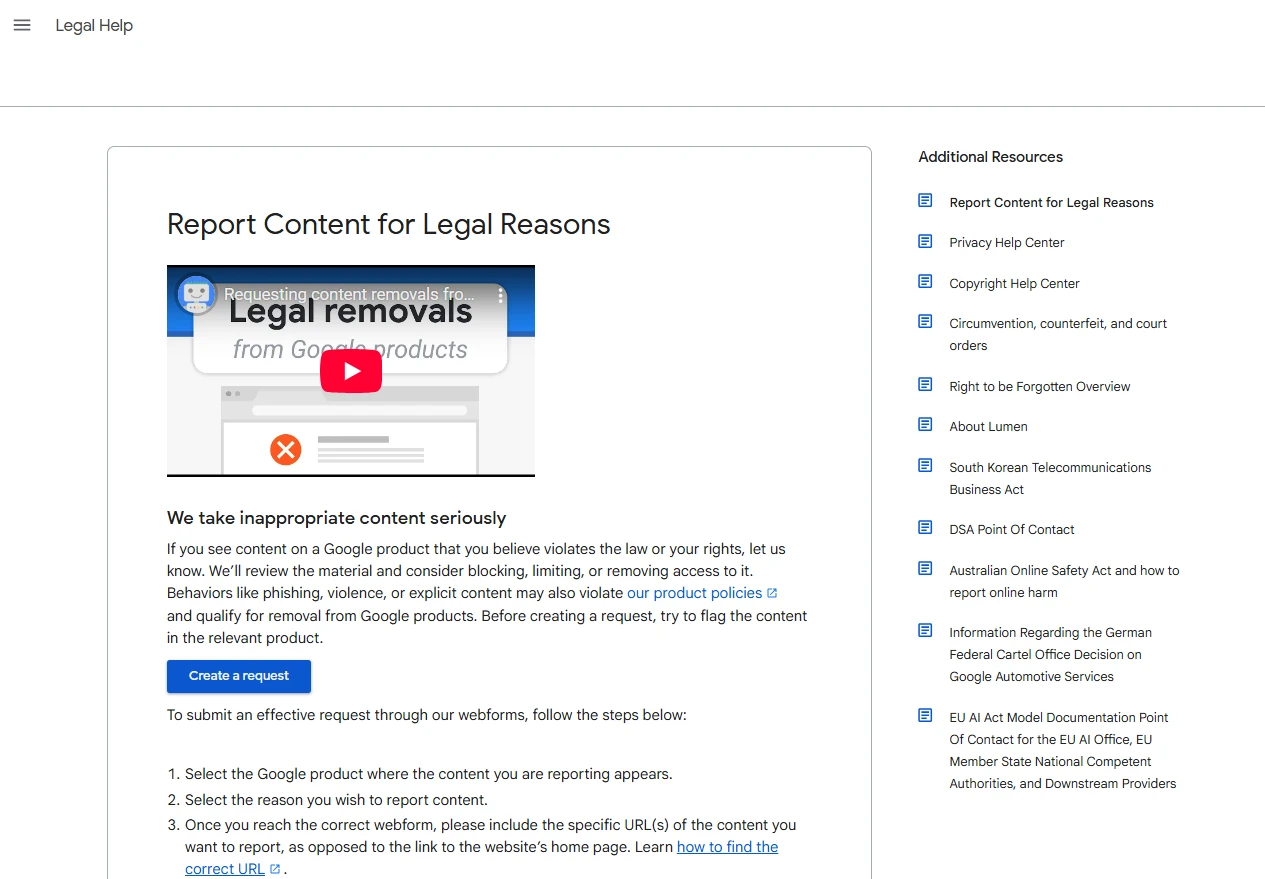
1. You Must Answer the Initial Questionnaire
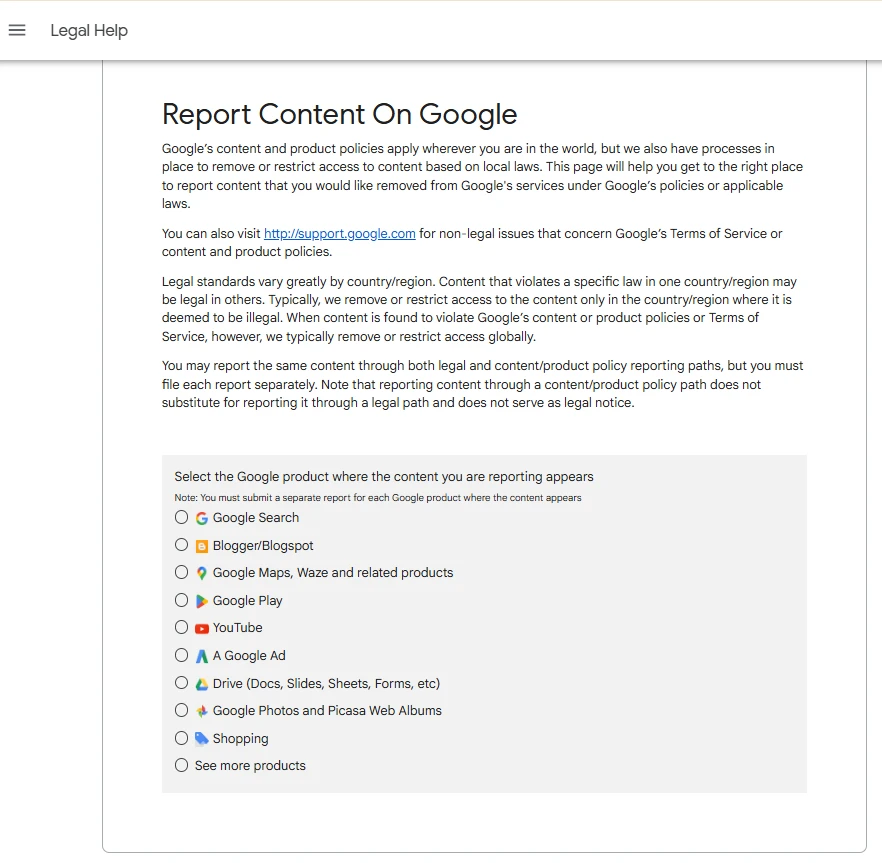
Access de form: Before Google displays the trademark complaint form, you are required to complete a short questionnaire. This step helps Google determine:
which Google product the issue appears on (for example, Google Ads),
what type of ad is involved (such as Search Ads),
and whether the issue relates to intellectual property, specifically trademarks.
Only after selecting Trademark infringement as the reason does Google allow you to proceed.
2. Trademark Ownership or Legal Authorization Is Mandatory
Access to the form is restricted.
You can only continue if you confirm that you are:
the owner of the registered trademark, or
legally authorized to act on behalf of the trademark owner (for example, as an attorney or official representative).
If you select “No” at this step, Google will block access to the trademark complaint form entirely.
This is intentional.
Google does not accept trademark complaints from third parties without legal authority.
3. Email Verification Is Required Before Proceeding
Once eligibility is confirmed, Google requires you to verify your email address.
The process works as follows:
You enter your email address.
Google sends a verification message.
You must confirm the email before the form is unlocked.
Only after this verification step can you continue filling out the trademark complaint.
This email becomes the official point of contact for:
follow-up questions,
status updates,
and the final decision regarding the complaint.
4. Only Then Can the Form Be Fully Completed
After completing all previous steps, Google finally grants access to the full Google Ads Trademark Complaint Form, where you will be asked to provide:
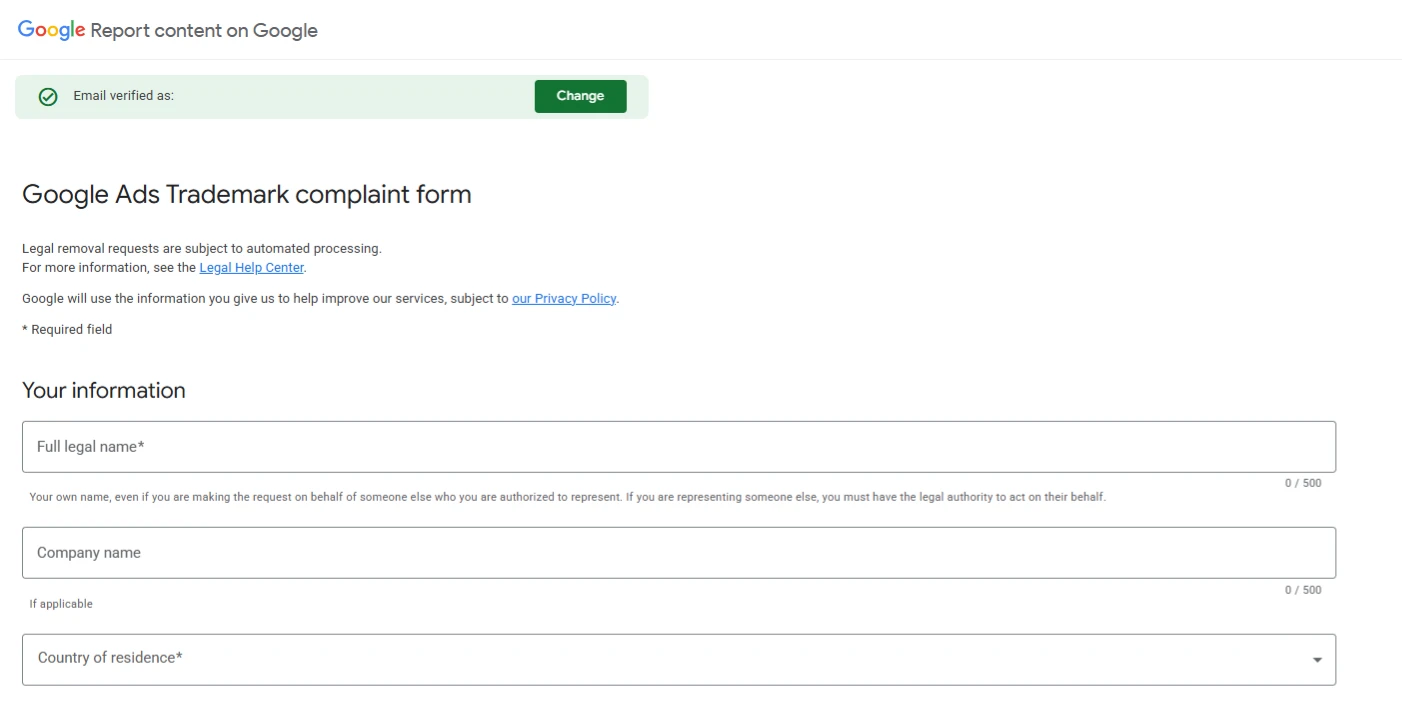
your legal name and company information,
the registered trademark details,
the country or region where the trademark is protected,
examples of ads allegedly misusing the trademark,
and a declaration confirming the accuracy of the information provided.
At this stage, incomplete or inaccurate information can delay or invalidate the review.
Why Google Uses This Process
This multi-step flow is not accidental.
Google applies these safeguards to:
prevent fraudulent or abusive reports,
ensure trademark law is respected across jurisdictions,
and protect advertisers from unjustified takedowns.
Understanding this process in advance helps you avoid confusion, delays, and unnecessary frustration.
Does Google respond?
Yes, and often faster than many advertisers expect.
In practice, valid trademark complaints frequently receive a response, sometimes within a short timeframe. I have personally experienced this with client cases and observed clear improvements over time in how Google handles these reviews.
This area has been actively refined by Google, especially in terms of response clarity and enforcement speed. In most cases, replies and decisions are handled by the Google Trust & Safety Team, which is responsible for policy enforcement across the advertising ecosystem.
For this reason, it is essential to:
monitor the email address used in the complaint submission,
respond promptly if Google requests clarification,
and treat the process with the same rigor as any other compliance or brand-protection activity.
When handled correctly, this is not a black box, it is a structured, professional, and increasingly responsive system designed to protect brands, advertisers, and users alike.
